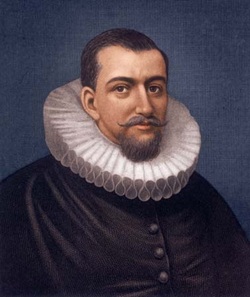
Henry Hudson
Henry Hudson was an English explorer and navigator who explored parts of the Arctic Ocean and northeastern North America. He was born in England in 1565, and died 1611. He was married to a woman named Katherine and had three sons; John, Oliver, and Richard. His first adventure he sailed for the Muscavey company in 1607, to find a waterway from Europe. He sailed three more times for the English, but when he sailed for the Dutch in 1609 to find the Northwest passage farther south, he found what is now called the Hudson River (the Hudson strait and the Hudson Bay are also named after him). Hudson departed Amsterdam on 4 April in command of the Dutch ship Halve Maen, and sailed into Manhattan's harbor on September 3rd, 1609. His reports of the good lands resulted in many Dutch settlements in the area. |
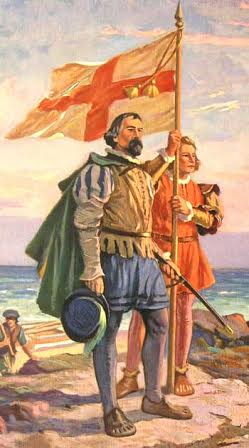
John Cabot
Giovanni Caboto , or also known as John Cabot, was an Italian explorer and navigator who was born around 1450 and disappeared in sea around 1499. He has a lot of names such as: Jean, Juan, Zuam and Zoane. He was not the first explorer, nor was he the first english explorer, he wasn't even the first explorer to explore North America. After Christopher Coulombs, he went under the commission of Henry VII of England to explore North America/ Canada. He went on a ship called Matthew, which was named after his wife Mattea. Mattea and John married in about the year 1484 and they had at least two children. His first successful voyage in 1497. He went on the ship Matthew with about 18 men, which one of them may have been his son. He reached the American mainland in about 15 days. He had tried one in 1496, but that one had failed. They had bad weather, a disagreeing crew, and low in food and water. John just had better luck the next year, as his third and last voyage was in 1498-1499. Henry the VII granted money to the person who found the new island, which then Cabot took on. He was granted to sail with 6 ships and try find the new island. John Cabot never returned, although one of his ships did. They presume that he died while on voyage in a storm. Presumably his son, Sebastian Cabot, survived and carried on with his fathers voyage for him. 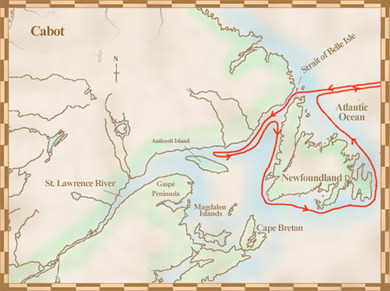
|
Bibliography:
http://youtu.be/27VZtPI_NGg
http://www.enchantedlearning.com/explorers/page/h/hudson.shtml
http://www.ducksters.com/biography/explorers/henry_hudson.php
http://www.heritage.nf.ca/exploration/cabot.html
http://www.bartleby.com/43/4.html
http://www.biographi.ca/en/bio.php?id_nbr=101
http://www.newadvent.org/cathen/03126d.htmhttp://www.humbleschurchroadmedia.com/uploads/1/1/5/2/11527278/283837683_orig.jpg?415
http://youtu.be/27VZtPI_NGg
http://www.enchantedlearning.com/explorers/page/h/hudson.shtml
http://www.ducksters.com/biography/explorers/henry_hudson.php
http://www.heritage.nf.ca/exploration/cabot.html
http://www.bartleby.com/43/4.html
http://www.biographi.ca/en/bio.php?id_nbr=101
http://www.newadvent.org/cathen/03126d.htmhttp://www.humbleschurchroadmedia.com/uploads/1/1/5/2/11527278/283837683_orig.jpg?415
