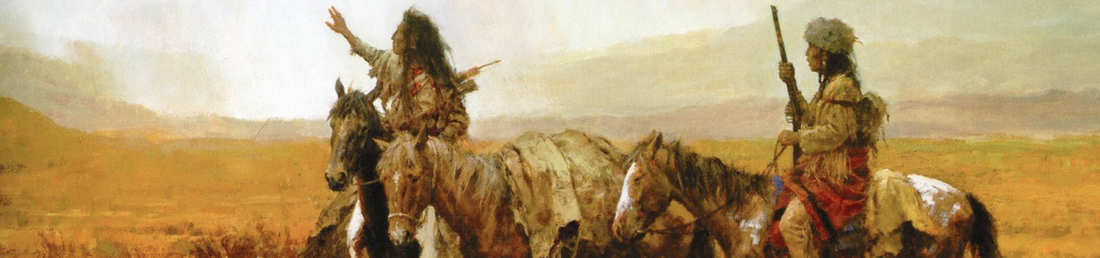
Cherokee and Apache (plains tribes)
The Cherokee and Apache are two of the many plains tribes in North America. On this page you can learn facts about their culture, lifestyle and history.
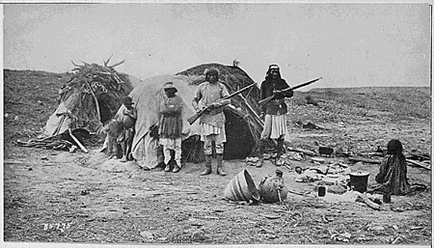
The Apache Tribe
The Apache tribe was one of the natives who came from the Alaskan region, Canada, and portions of the American Southwest. Eventually they migrated to the southern part of United States. They were nomadic, which means that they barely settled in one place, but traveled around. There are thirteen different Apache tribes in the United States: five in Arizona, five in New Mexico and three in Oklahoma. |
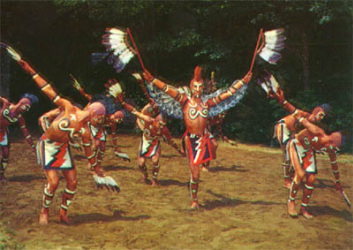
The Cherokee Tribe
The Cherokee were one of the five major tribes from the south east of what is now the US, specifically Georgia, North and South Carolina, Virginia, Kentucky , and Tennessee. When the British came to colonize America the adopted many of their cultural aspects. However the Cherokee might be most famous for the trail of tear. |
Main facts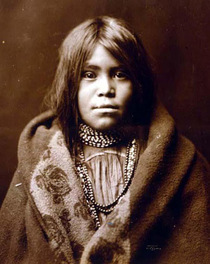
When and Where
Arrived to the Southwest and in northern Mexico around 1300 - 1400 BC. Last documented raids were found around 1930. Clothing Women from the Apache tribe wore buckskin dresses and men wore leather war shirts and breech-cloths. In the 1800's, many Apache men slowly changed their clothes to white cotton tunics and pants that were adopted from Mexicans. In that time period, the women wore calico skirts and dresses. Their clothes were often fringed and beaded for decoration. Traditionally the Apaches did not wear feather war bonnets, but later they got affected by the Plains Apaches who adopted headdresses from their ally: Kiowa. Women usually wore their hair long and loose or gathered in a bun with hourglass-shaped hair ornaments called nah-leens. Language Past – Native Apache language (closely related to Navajo). Present – English, Native Apache language. Native Apache language is a complex language that works with tones and several different vowel sounds. Shelter Past - Most Apache people lived in wickiup which a matting of brush and sometimes a buffalo-hide tarp covered over simple wooden trusses. Wickiup was often the size of a camp tent that we use now. It was easily to build, because it took only two hours for an Apache woman to build a new wickiup if she had enough brushes. The Plains Apaches and some Lipan Apaches used buffalo-hide tipis instead, which are more spacious and easier to heat than wickiups. Present - Apache people today do not normally use wickiup for shelter. Most Apaches live in modern houses and apartment buildings. However, some followers of the traditional Apache religion do live in modified larger wickiups, because their beliefs require them to burn down and rebuild their houses whenever there is a death in the family. Total population Today there are approximately 300,000 Apache still around. |
Main facts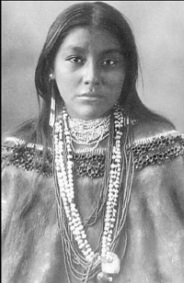
When and Where
Artifacts indicate that people have lived in the south east of the united states since more than 11,000 years ago, at the end of the last Ice Age, and the Cherokee are still around today. Clothing Cherokee men wore breechcloths and legging. However Cherokee women wore wraparound skirts and poncho-style blouses made out of woven fiber or deerskin. They also often wore bead necklaces and copper armbands, and the men often had tribal tattoos on their faces and bodies. The Cherokees also often wore leather moccasins on their feet. The Cherokee did not ear feather head dresses unlike may of the other plains Indians tribes. However after colonization the Cherokee wore a lot of European clothing like cotton shirts and blouses. Language Past - The Cherokee language is complex with many soft sounds it also has a complex writing system with many symbols. Present - Today, most Cherokees speak English however 20,000 still speak Cherokee. Many Cherokee people use a modified English alphabet instead of the Syllabary and one reason for this is, because it is easier to type. Shelter Past - The Cherokee Indians lived in traditional houses in settled villages, usually near a river. These houses were made by weaving rivercane, wood, and vines into a frame, then coating the frame with plaster. The roof was either thatched with grass or shingled with bark. The Cherokee word for these houses is Asi and they were also used in other southeaster tribes. Present - Today most Cherokees live in normal modern houses and apartments, however some still live in traditional housing in reserves. Total population Although there are many people with Cherokee ancestry all around the world, the number of citizens of federally recognized Cherokee tribes number close to 288,500. |
Culture and LifestyleChildren's Lifestyle
The Apache children played with each other and helped around the house. Many Apache children liked to go hunting and fishing with the adults. Once the Apaches acquired horses, girls and boys as young as five years old learned how to ride. An Apache mother traditionally carried her baby in a cradle board on her back. Men and women's roles Women from the Apache tribe were in charge of the home. Besides cooking and taking care of children, Apache women built new houses for their families every time the tribe moved their location. Though it was rare for an Apache woman to become a warrior, girls learned to ride and shoot just like the boys did, and women often helped to defend Apache villages when they were attacked. Apache men were hunters, warriors, and political leaders. Only men were chiefs in the Apache tribe. Both genders took part in storytelling, artwork and music, and traditional medicine. Special occasions The Apaches painted their faces for special occasions. They used different patterns for war paint, religious ceremonies, and festive decoration |
Culture and LifestyleChildren's Lifestyle
Cherokee children helped a lot around the house, but still played with other children. Cherokee children had dolls toys and games to play. Also teenage boys would learn how to hunt and fish. Anejodi was a game quite similar to the Iroquois game of lacrosse, often played by teenagers and adult men. Men and women's roles The Cherokee men and women had equal power in their society. The men were in charge of hunting, war, and diplomacy, while the women were in charge of property, farming, and family. Cherokee men made political decisions for the tribe, however worn made social decisions for he clan. Women were landowners, but men were chiefs. Both genders also took part in storytelling, artwork and music, and traditional medicine. Special occasions The Cherokee had many special occasions which they often did tribal dances and painted their faces for them. |
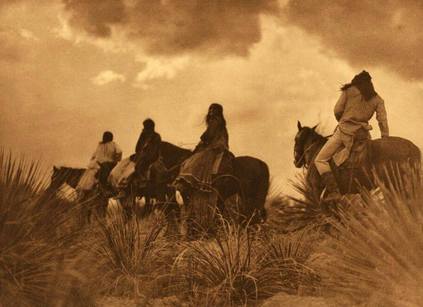
First tribe who learn how to ride a horse
Historical factsThe Apache was one of the first tribes to learn how to ride and use horses.
By 1700, a large portion of the Apache Indians had migrated to the Kansas plains. Around the 1730s, the Apache Indians began to battle with the Spaniards. In 1743 a Spanish leader agreed to designate areas of Texas for the Apaches to live, easing the battle over land. In a ceremony in 1749, an Apache chief buried a hatchet to symbolize that the fighting was over. |
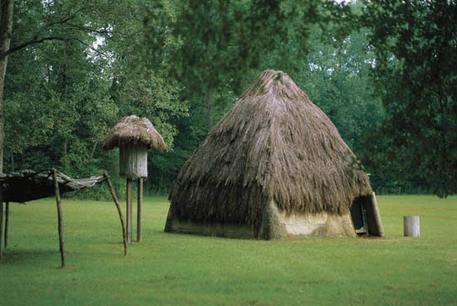
A traditional Asi (Cherokee)
Historical factsDuring the Seven Years' War from 1756 to 1763 and American Revolution that occurred from 1775 to 1783, invasions of the Cherokee homeland were repeated due to the breakdown in relations with the British.
Cherokee history experienced an intellectual change with the founding of Carolina in 1670 and Georgia in 1733. At that time period, the Cherokees became key trading partners of the British in Augusta and Charleston, South Carolina. The Cherokees had to suffer from American Revolution that was even more disastrous than the Seven Years' War and therefor, the Cherokees became divided over how to respond to the emerging crisis. |
Apache - White Buffalo |
Cherokee - Morning Song |
Bibliography
"Apache Indians." Apache Indians. Web. 21 May 2014.
"Apache Indian Tribe Facts." APACHE INDIAN TRIBE FACTS. Web. 25 May 2014.
Benjamin Franklin, and James Madison. "Indian Tribes." Web. 24 May 2014.
"Cherokee Indians." The History of the. Web. 07 May 2014.
"Cherokee Nation Home." Cherokee Nation Home. Web. 08 May 2014.
Ducksters. "Native Americans." Native American History for Kids: Apache Tribal Peoples. Web. 15 May 2014.
"Indian Pictures." Indian Pictures. Web. 21 May 2014.
Lewis, Orrin, and Laura, Reddish. "Cherokee Indian Fact Sheet." Facts for Kids: Cherokee Indians (Cherokees). Web. 13 May 2014.
Lewis, Orrin, and Laura, Reddish. "Apache Indian Culture and History." Native Americans: Apache Indian History and Culture. Web. 08 May 2014.
R. E. Moore. "Horses and Plains Indians." Horses and Plains Indians. Web. 25 May 2014.
The American Indian Heritage Foundation. "Apache Indians." The History of the. Web. 23 May 2014.
Tyler Boulware. "Cherokee Indians." New Georgia Encyclopedia. Web. 25 May 2014.
by Jack Maxwell, Sangmun Lee
